

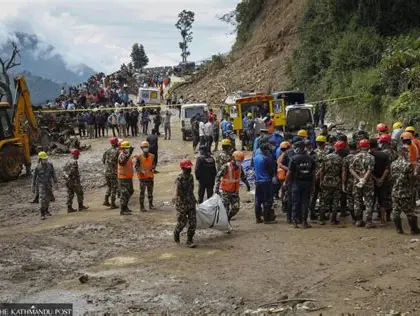
Nepal marked a national day of mourning on Monday, thirteen days after the catastrophic Aug. 26 floods that killed more than 1,300 people across Nepal and Tibet and left around 5,000 missing. Families followed traditional Hindu mourning rituals, which last thirteen days, with relatives staying home, receiving visitors and performing final rites. Many families whose loved ones are still missing held symbolic funerals, saying the ceremonies gave them some emotional relief even without the bodies. Flags at government offices were lowered to half‑staff, and candlelight vigils were held throughout Kathmandu to honor the victims. Search efforts continued, but frustration grew as families protested outside government offices, demanding faster rescue operations. Many of the missing were workers at hydropower projects along the Bhotekoshi River, where tunnels and buildings were buried under debris. Relatives said rescue teams were too slow to bring in heavy equipment and complained that only small machinery arrived days after the disaster. About 900 hydropower workers remain missing, and roughly 500 are believed trapped in tunnels. International rescue teams from India, China, South Korea and the United States are digging through collapsed structures, and three workers have been pulled out alive in recent days. Candlelight vigils and public gatherings continued as Nepal mourned and waited for answers.