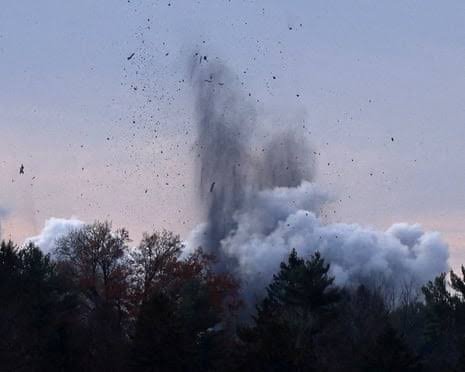
The U.S. Army carried out a controlled explosion in southeast Iowa to destroy nearly 10,000 pounds of unstable lead azide, a toxic explosive that officials said had become too dangerous to move. The detonation took place at the Iowa Army Ammunition Plant in Middletown after authorities warned that the material could potentially explode on its own. Residents within the evacuation zone were told to leave before the blast, and many nearby communities spent days preparing for the possibility of lead contamination. Witnesses reported hearing loud booms and feeling shock waves, but officials said there was no major damage to nearby infrastructure and no secondary explosions occurred. Army leaders said the operation successfully destroyed the explosives while keeping risks to the public as low as possible. Despite those assurances, concerns remain about possible lead pollution. Air monitoring immediately after the blast did not detect airborne lead, but experts said it is too early to know the full environmental impact. Scientists plan to analyze soil, water and surface samples in the coming days to determine whether lead particles spread beyond the ammunition plant. The Army said it will continue monitoring the area and has promised to clean up any properties found to have unsafe levels of contamination. The detonation followed years of concerns over the aging stockpile, with some experts questioning why the material was allowed to remain in storage long enough to become a major safety risk.